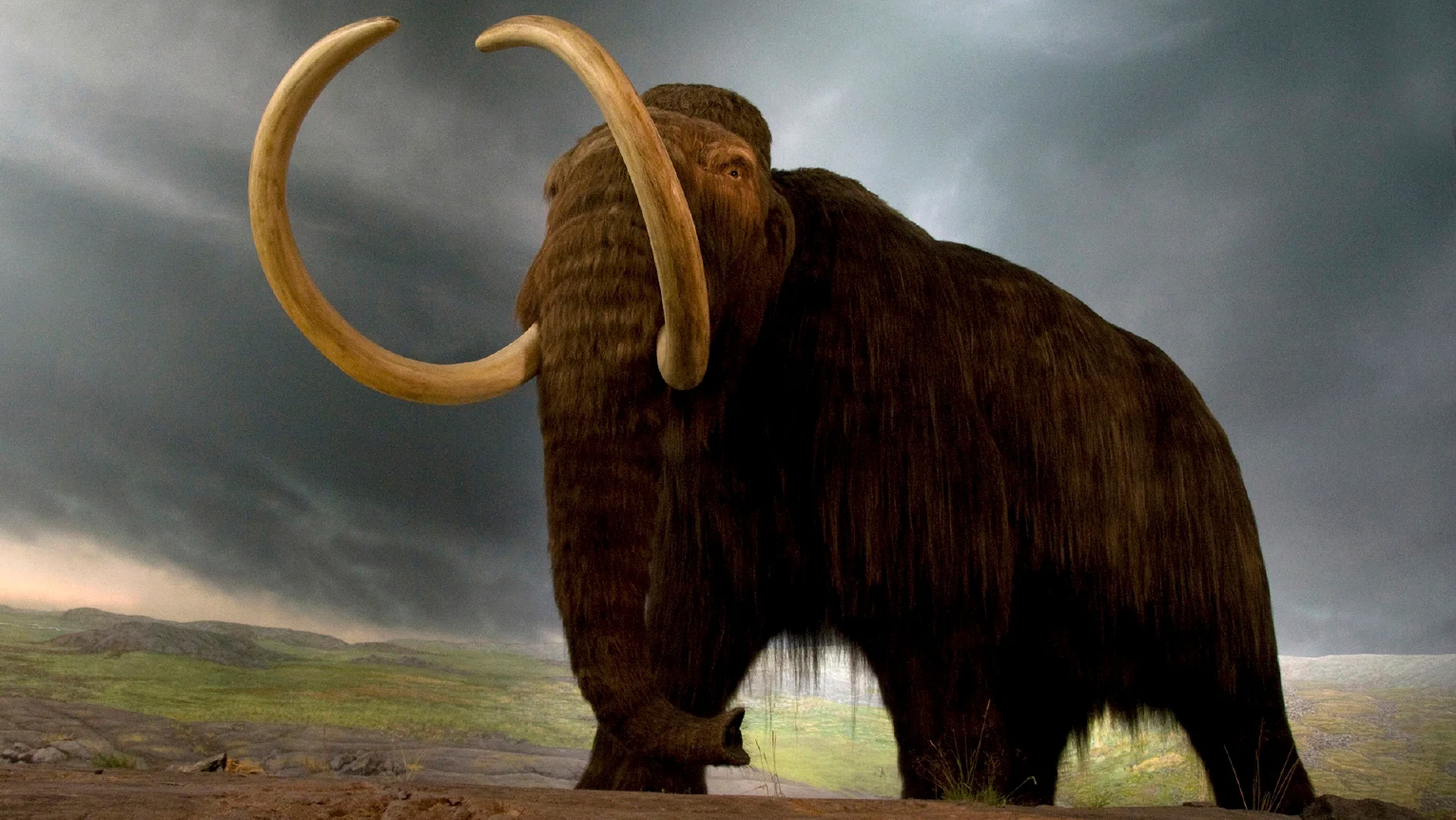
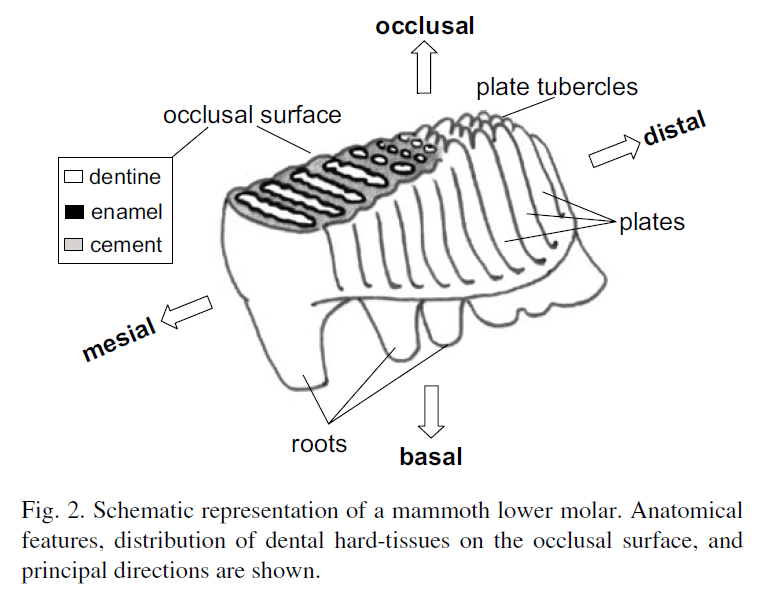
An introduction to the Woolly Mammoth and the specialized molars that helped it process tough vegetation during the Pleistocene Epoch. One of the most recognizable creatures of the Pleistocene Epoch, the Woolly Mammoth diverged from other species around 800,000 years ago. The Woolly Mammoth had a broad range, stretching from Western Europe, through Siberia, into North America, living alongside early humans. They were about the size of modern African elephants, with shoulder heights for males reaching 8 ft 9 in to 11 ft. Females were smaller, measuring at a height of 7 ft 6 in to 8 ft 6 in. Its fur, smaller ears, and shorter tail helped it to thrive in the harsh cold. Woolly Mammoths had two types of different teeth; modified ivory incisors that made up their tusks, and two sets of molars on the top and bottom jaw. Mammoth molars were powerful grinding teeth, with broad chewing surfaces and repeated enamel ridges that helped process tough vegetation.These molars were composed of a series of enamel plates, filled with dentum cores and cementum surrounding each plate to create the unified tooth. A journal diagram from Marco P. Ferretti shows this structure below. Climate change and habitat loss after the Last Glacial Period, ending 11,700 years ago, compounded by human hunting, led to the species' decline. The last Woolly Mammoth population was estimated to have died around 4000 years ago on Wrangel Island off the coast of Russia.Woolly Mammoth Teeth
About the Woolly Mammoth
Woolly Mammoth Teeth
Decline and Extinction
